Sunday, June 22, 2025

Week 3 POL 130: MONTSERRAT

 Week 3 POL 130:  Montserrat


    We started the day by going up the cable cars to this beautiful place up in the mountains called Montserrat. It has a giant church with crazy views and "spiritual energy." This was a crazy trip that combined faith, food, hiking, and politics in one day. After we explored the monastery and learning about the religious and historical importance, we hit up the buffet which had FREE BEER, and then hiked up to the cross at the top of the mountain. 


    This journey to the Montserrat showed that it was more than just a monastery, but a symbol of the Catalan identity. During the Franco dictatorship when the Catalan language was banned, Montserrat was an escape for the Catalan culture where the people could still speak their language and find a sort of spiritual resistance. In POL 130 we've talked about how identity is shaped through political power. This place was the perfect example of that as we saw how religion and resistance to the government come together to help me understand how the identities of Spain have been suppressed and preserved. 


    We've also learned how public spaces can be political. As we hiked up the mountain to the cross, we saw Catalan flags and graffiti that aimed at political messages. As we talk about the reoccurring theme of how public spaces carry meaning. Even if it's downtown Barcelona, a walk of Barceloneta, or even hiking up the mountain of Montserrat, these places hold history about who belongs and who remembers. This journey to Montserrat showed me how politics are everywhere and that political identity isn't always a legality and can be quiet and symbolic. This experience helped me see Catalonia as more than a region, but a place with deep history, unique identity, and a great sense of self and Montserrat captures all of that.


Week 3 POL 130: The Catalonian Parliament

 Week 3 POL 130: The Catalonian Parliament


    After a long hot walk, Nadim guided us to the Parliament of Catalonia, which was a beautiful and historic building that is the center of Catalan governance which is a huge topic for our trip to Spain. Before this visit I didn't fully understand how strong the Catalan identity really was, but after learning about the government in the Parliament I could finally wrap my head around the politics that surround them. Our guide and research after explained that even though Spain is its own state, Catalonia has its own language, flag, and culture. I also learned that in 2017 this parliament voted to get independence from Spain which totally backfired and led to national backlash and the imprisonment of many Catalan leaders. 


    This connects with our learnings in POL 130 because Catalonia is an example of a sub-state nationalism where a regional identity pushes for sovereignty. This also shows how nationalism and unite cultures but also divide them. This can also compare the Spain and U.S. politics, because the states have some autonomy in their own government and certain niche laws, but not their own language or foreign relation policies. Even the architecture of the Parliament tells about the Francoist regime's repression over the Catalan identity into todays political debates. This shows how the power lives in many things such as symbols, rituals, and history. 


In the Parliament we got to witness the real political conflict that happens on a day to day basis with these officials. Concepts like federalism, nationalism, and identity are all used in these courts of law. It also, changes the way we think about power, because its not loud or obvious, its about who gets to fly their flag or speak their language. Visiting the Parliament was more of a deep dive into the politics of identity and autonomy. This trip helped me compare the theories from our POL 130 class and see how they work in the real world.

Week 3 POL 150: Political Protests at the Generator

Week 3 POL 150: Political Protests at the Generator


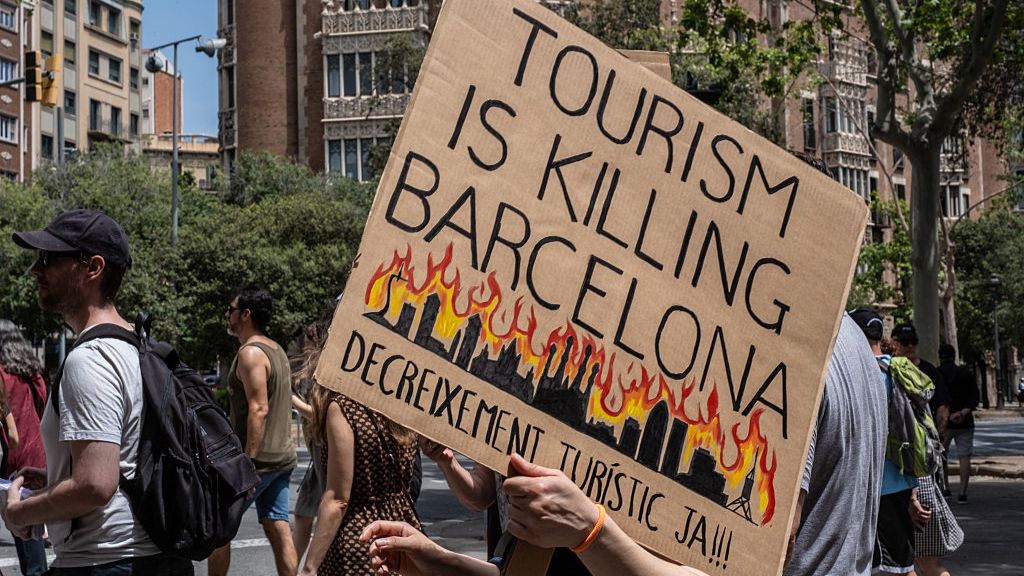
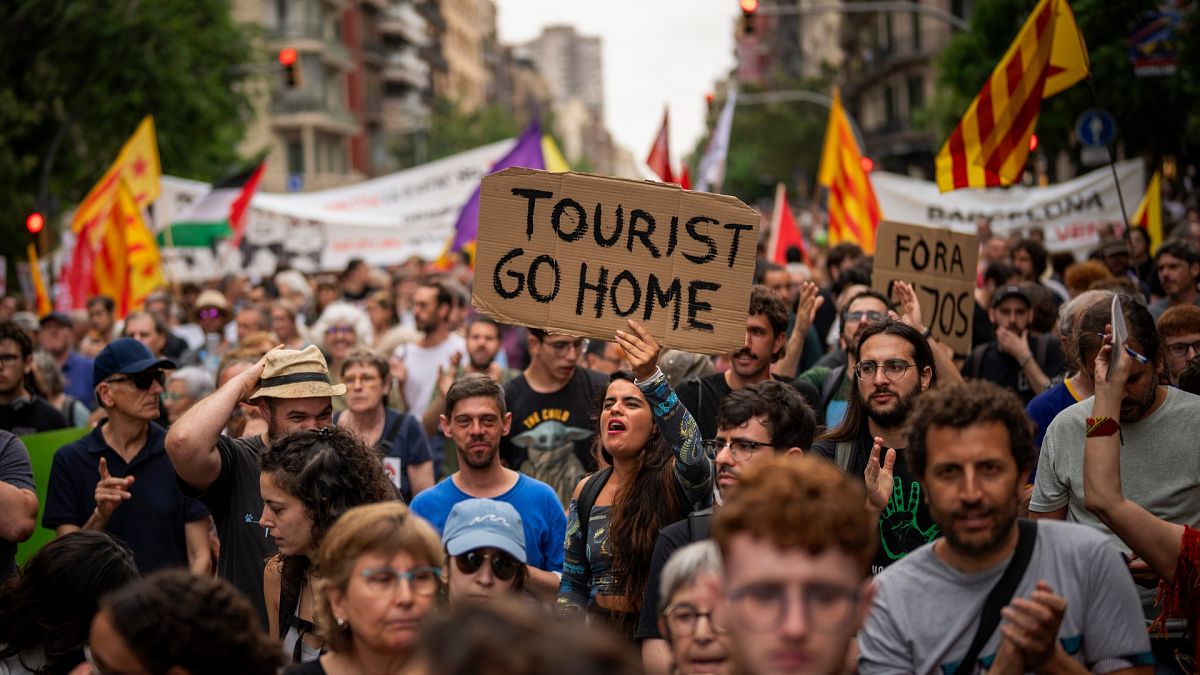
    After a late night out, I was awoke by a noise outside of the Generator Hostel. It was a giant anti-tourism protest happening after all of the built up tension between the locals and the tourists. This is because the citizens of Spain are being kicked out of their homes because of Airbnbs and similar rental agencies to host tourists instead of the people that have been living there for decades. A huge group of protestors came down the street chanting and waving signs. They were there to make a statement against pro-tourism residences, which locals see as the problem of the tourism problem in their country. A TikTok that came up on my feed showed locals spraying tourists with water guns and yelling at them.

Spain tourism: The protesters and residents pushing back on tourism in  Barcelona   

 In POL 150, we've talked about power and public space. As I watched the protesters demonstrate their movement, I noticed that tourism has become a political issue where locals are demanding accountability from businesses and governments that profit from the tourists while kicking locals out. The protests have become a way to say that this is still their home. The reaction from the workers and guests was disgust and annoyance which shows how easily people can dismiss protest and be offended by it. 

Barcelona protesters spray visitors with water: Why has Europe fallen out  of love with tourism? | Euronews

    This was a protest, but it was also a collision of worlds and as we've learned about freedom and rights, but in Barcelona I have learned about what happens when people feel that their social contract has been terminated. This sparks debate about who has the right to shape the future of the city and who belongs in public spaces. This almost turns from a political debate to a humanitarian one where the future can be determined by politics but also humanitarian rights. 

Week 3 POL 150: Intro to Girona

 Week 3 POL 150: Intro to Girona


    This week ended with us taking our journey to Girona. It was super hot out, but it was very beautiful with the scenery looking similar to Barcelona but more calm and fancy. We saw the cathedral where Game of Thrones filmed scenes of King's Landing. Other than the crazy Game of Thrones references this visit helped me think about the political history and symbolism used in this region of Spain. 


    The cathedral was used as a statement of power in religious and political settings. In POL 150 we've talked about how institutions play roles in shaping the political authority in a country. After looking up the background of the church, I found out that the Catholic Church had heavy control over peoples lives, because so many people strongly believed in the Catholic religion. Our tour guide also told us about how people live and die about their religion, such as when the jews were told to convert to Catholicism or leave Spain, so they left.


    Girona has become a huge space for Catalan identity. When walking the streets I noticed many Catalan independence flags which connected to the teachings about liberalism and autonomy. The divide between authority and regional autonomy brings up the question about who should have what power? I learned about how political thought is all around us in our everyday lives from old cathedrals to street graffiti and flags. I've learned about how symbolism is a reoccurring theme in our journeys throughout Spain. Our environment can help us more to understand political theory. Girona gave me some great pictures and gave me lens to see into the political thought of the nation. 


Monday, June 16, 2025

Week 2 (POL 130) Chocolate Museum and Fascism

 Week 2 (POL 130) Chocolate Museum and Fascism 


    This week I visited the Chocolate Museum in the Born District of Barcelona. The museum showed the history of cacao and its early use by the Aztecs who saw it not only as an edible treat, but as a currency. They used it to trade, pay taxes, and pay tribute to their rulers. This connects to our POL 130 teachings about power and economic systems. Anything that relates to money is always political and used by the commonwealth and the people in power. Later on in history, the European colonizers brought cacao back to Europe which made it a luxury and a status piece. When the old systems and meanings of cacao were destroyed it was clear that colonialism seizes things other than land such as values, meanings, and even systems of trade. 


    After the museum I noticed a porta potty that was graffitied with an insert about fascism which instantly made me think about our POL 130 class. It said Fascistas fuera del barrio which means Fascists out of the neighborhood. This act of vandalism reminded me that Spanish politics are still rooted by its fascist past, especially Franco's fascist dictatorship. Spain's transition to Democracy was fairly recent, happening in the 1970's and tensions are still high between left and right wing parties trying to claim political power. 


    The graffiti was a political act of resistance, showing who does and doesn't belong in their community. It connects to the topics of public space, protest, and political memory. In Barcelona you notice that the politics of identity are out on the walls, sidewalks, stores, public transits, and even porta potties. 

Sunday, June 15, 2025

Week 2 (POL 130) Weekend of Sketchy Shots and the Seaside

Week 2 (POL 130) Weekend of Sketchy Shots and the Seaside


    This weekend after finishing our classes for the week and visiting countless museums, Hayden, Sydney, Abbey, and I went out to go drink. After leaving the Colors club we were wandering the streets looking for our next spot to party, that's when an Indian man approached me with a killer deal which was 2 beers and 2 shots for €12!! At first I was skeptical, but I saw other people walking in and we just sent it. 


    He led me down a narrow staircase into a dungeon with dance music. The basement looked like the catacombs, but I did get my 2 beers and 2 shots, but the shots tasted like lighter fluid and the beers were in small paper cups. Still it was a fun experience and I met these two guys; one from Germany and one from Argentina. We all ended up dancing to Stir Fry by Migos and dancing the night away! 


This experience connects to POL 130, because we learn about the economy and how legal policies don't regulate everything. Just like the technically legal THC marijuana clubs that need an invite to be accepted into, the setup was technically illegal but socially accepted. This is because tourism is a huge part of Spain's economy and the police usually look the other way for things like this. This experience also ties into migrational labor, because this Indian man that gave me the deal was making opportunities in a global city where opportunities can be limited. 


    The next day, I traveled to Begur, a beach town in Costa Brava with my mom and auntie. This city was very beautiful and had an amazing view of the coastal beach. I learned that Catalan flags are more common than Spanish flags and that the people considered Catalonia a nation within Spain. This connects with our learning about nationalism and regional identity. I also saw that in Barcelona there are a lot of protests and graffiti, while in Begur it's quiet pride with Catalonian flags. After the trip I saw how the Spanish identity pertains to the region and how there are different ways to resist tourism in both regions. 


Saturday, June 14, 2025

Week 2 (POL 150) Cable Cars and Arenas de Barcelona

 Week 2 (POL 150) Cable Cars and Arenas de Barcelona


    Today, Hayden, Abbey, Rylie, and I went to the Montjuïc cable cars to see the beautiful Barcelona city from above. It was an amazing experience seeing the landscape from above seeing rooftops, churches, and highways.


    As we were going over the city, I thought of a way to relate this to the POL 150 class. There is a reoccurring topic of perspective in public spaces. From above the city looks calm and in order, but once you're on the ground in the city, it's a bunch of movement, noise, and commotion. This shows that the view from above might be ideal, but the truth of the politics is the reaction from within the people. 


    After the ride, we went to the Arenas de Barcelona which used to be a bullfighting ring and now is a giant shopping mall. At one point there were gladiators and death, now theres a Sephora and a movie theater. The transformation of different spaces made me think about how societies decide what things to preserve or change, just like the ancient roman remains of Barcino from the Gothic Quarter. The Arena, which was once a symbol of Spanish identity has been redesigned for a modern capitalist society. 


This trip connects to what we learned about in POL 150 about political memory and identity. The Barcelona government didn't demolish the arena, they repurposed it into a center that could be used. This can be correlated to the Spanish government after the rule of Franco and how they had to repurpose their government under the rule of Juan Carlos. We ended the day by taking a nap and then going out for some drinks to celebrate our great time in Barcelona. 


Week 2 (POL 150) Negronis, Beer Pong, and Picasso

 Week 2 (POL 150) Negronis, Beer Pong, and Picasso


    Last Night was a random Tuesday, but was actually one of my favorite nights in Barcelona. Me, Hayden, and Abbey ended up at a bar called Space Cowboys, which I thought was going to be a weird kids restaurant, but it had a retro future vibe and was very funky. They had 2 mixers for 15 euros, so we were SOLD. The bartender made my drinks super strong, but the buzz was definitely worth it. 


    After I finished my drinks, I ended up in a game of beer pong with 3 random guys; 2 from Philadelphia and one from Brazil. The guy from Brazil was named Saiid and he was pretty bad, but I carried us to victory. I was pretty messy, but they were good guys and we instantly clicked. We talked about football, basketball, and I even asked a couple questions about politics in Brazil which is very similar to the United States, because they're a Democracy and function almost exactly the same. 


    Earlier that day me, Hayden, and Abbey went to the Picasso Museum in the Born District. I learned that Picasso's evolution was shaped by the political turmoil that he had lived through. His early works were very close to home and personal, but into the Cubist period and beyond the politics began to shape his work. His pieces connected to the Spanish Civil War and authoritarian rule, you can feel his frustration through the distorted faces on the political figures. 


    I realized that this ties into our POL 150 class, because political thought isn't just about different forms of government and institutions. It's also about how we see the world around us and adapt to these changes. Picasso's expression of classical portraits shows the way that political thinkers reject the old ways of expressing things. His art helps us realize that we need political stability and a smooth running community that involves its citizens. Picasso's works show an idea of individual rights and critiques oppression and inequality. His refusal to go back to Spain because of Franco's rule shows the misuse of power, authority, and legitimacy. 


Monday, June 9, 2025

Week 1 (POL 130) From Elite Housing to Canvas of Identity; Park Guell


Week 1 (POL 130) From Elite Housing to Canvas of Identity; Park Guell


June 8, 2025


From Elite Housing to Canvas of Identity; Park Guell


6/2-6/6


    This is a picture of me at Park guell overlooking the city and the beautiful architecture designed by Antoni Gaudí. Park guell perfectly ties into our theme of how public spaces can express identity, culture, and power. 


Our tour guide explained to us that Park Guell was originally meant to be an elite housing development. The plan failed, but became a cultural public landmark that shows a great example of how cities use architecture to show identity. Park Guell is deeply designed to be Catalan. What I mean by that is the design, the materials, and contrast with the landscape. This is because it was created by Antoni Gaudí who was a Catalan Nationalist and devoted Catholic. He made his work to make a cultural movement to express Catalonia's ideals as work that was distinct from the rest of Spain. 


In Political Science we've talked about how public spaces can reflect different political decisions about cultural history and what is remembered. Park Guell is a perfect example of this because it turned from a failed higher up project into a symbol of Catalan culture recognized across the world. 


Going through Park Guell made me understand a little bit more about how overlooked politics are in the spaces we walk through every day. In Spain, even a public park can spark discussion of identity, culture, and political power. 

Week 1 (POL 150) La Sagrada Família and Catalonia Independence


Week 1 (POL 150) La Sagrada Família and Catalonia Independence


June 8, 2025


Catalan Equality & Identity in Barcelona's Architecture

6/2-6/6


    On Wednesday we visited La Sagrada Familia. The church was giant!! It was was bigger than I expected and was very detailed and intricate with its design. The space was also heavily Political in my lens. The church asserts the fact that Catalonia is not just a region but a true culture with its own language and identity. 


The cathedral was made by the famous architect Antoni Gaudi. His design and architecture are described as masterpieces of religious art. Gaudi wasn't just an architect but also a Catalan nationalist. This means he believes in the individual qualities and traits of his culture and wanted to show that in the details of his work. 


In the church, there is a heavy use of gothic elements and writing in the Catalan language. The church makes its own regional identity to push Catalonias independence and political control. In political science this goes with the reoccurring topic of nationalism.  Catalonia's push for better independence isn't just about government or economics, its about the symbols of their culture and La Sagrada Familia is the most powerful symbol in Barcelona. 

Visiting the church showed me how politics and culture are intertwined. In Spain there are many different ways to debate over nationalism. La Sagrada Familia is a perfect example of what it means to be Catalan in a country where their ideals are still being contested. 


Sunday, June 8, 2025

Week 1 (POL 150) A Reflection of Catalonia's Past and Present


Week 1 (POL 150) A Reflection of Catalonia's Past and Present


June 8, 2025


Catalan Equality & Identity in Barcelona's Architecture

6/2-6/6


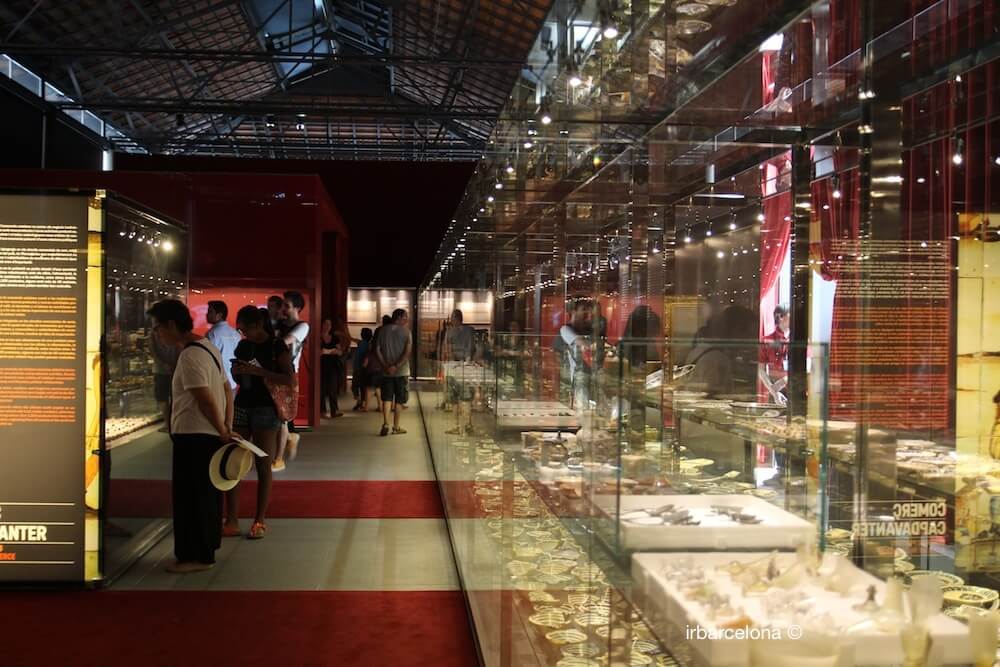
    On Tuesday we went to the Born district in Barcelona which I thought was very cool. There was a tour guide that showed us ruins that are remains of a neighborhood destroyed in 1714 after the War of the Spanish Succession. At first when looking at the outside it seems like an old market hall, but when you get in it's like a time machine to the Roman empire. 
The League of Augsburg: The Siege of Barcelona 1714
    After reading all of the articles scattered around the museum, I learned that the center is made of excavated ruins of the 1714 Siege of Barcelona. This was a big moment in Catalonia's history. I also learned that the king of Spain defeated the Catalan troops and took away it's institutions, language rights, and set up a huge military base to keep the Catalans at bay. This was the start of the Catalan independence narrative. 

The space was very preserved and shows that the 1714 defeat is not just a memoir of history, but a symbol of freedoms that were lost by the Catalans. The way it is presented shows how societies remember the past to build identity and unity among the culture. The Born Centre is an example of politics, because of how its history is used to help present day Political Goals. The event of 1714 plays a big role in Catalan's nationalism and pieces like this one are a part of a Political Strategy to keep their nationalism alive. 

▷ El Born CCCM Barcelona - Culture & Memory Centre | irBarcelona

Visiting the Born Centre helped me understand how history can be used to help culture and remind people of how to revitalize their political power. It showed that political science isn't just about laws and government, it's also about history and stories. The Centre isn't just preserving ruins, it's helping others understand the Catalan's identity and relationship with the Spanish state. 
 

Week 1 (POL 130) The Gothic Quarter as a Symbol of Catalan Political Identity

 Week 1 (POL 130) The Gothic Quarter as a Symbol of Catalan Political Identity


June 08, 2025

The Gothic Quarter as a Symbol of Catalan Political Identity

6/2-6/6


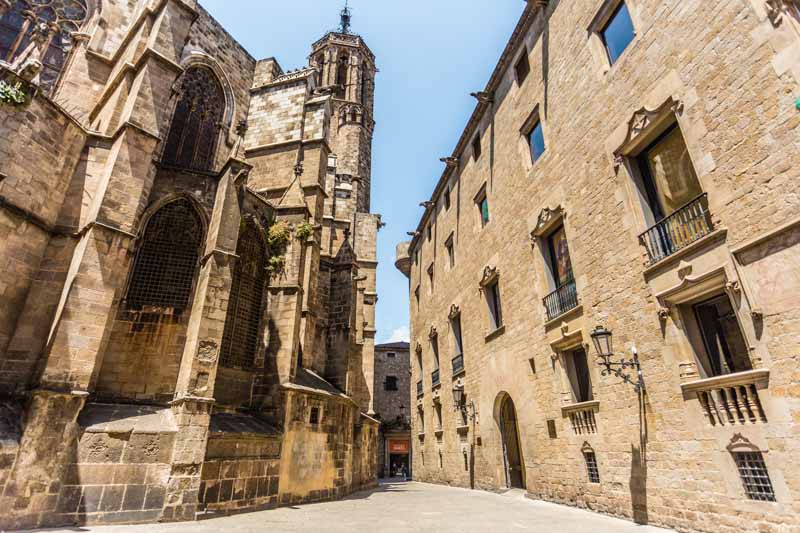
Barcelona - Gothic Quarter and Born - Drive me Foody
    During my visit to the Gothic Quarter in Barcelona, I was amazed by the quarter's beautiful architecture but also the political significance and appearance of the Catalan political identity. I have now become more aware about the Political significance of the Gothic Quarter and its symbol of Catalan Identity. 
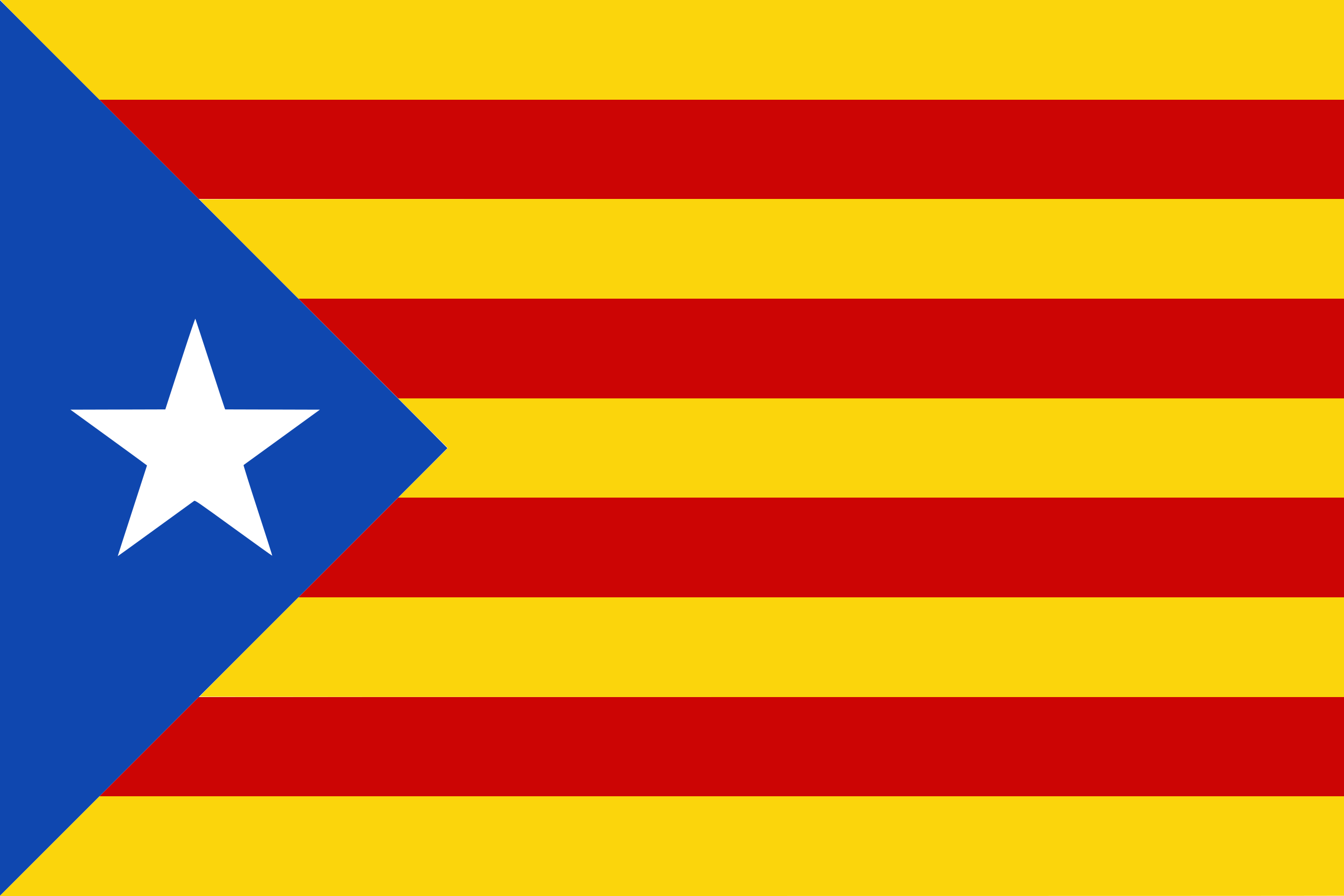
Estelada - Wikipedia
The Gothic Quarter is home to Plaça Sant Jaume, this is where the Catalan government and Barcelona city hall are located. This regional power shows how Catalonia stays a big political figure within Spain. There are also Catalan flags all over the quarter and Catalan grafitti all over the streets. Walking down the streets I became aware of Catalan identity which sparks big debates over self government and identification of the nation. 


By experiencing this culture firsthand, I can see how their identity is embedded in public spaces. The constant reminder of their culture shows Catalonia's narrative of determination. The Statue of Autonomy and the independence referendum are rooted in the Gothic Quarter's culture and politcal space. 

In all, my visit to the Gothic Quarter showed the significance of not only Spanish but Catalan culture. It also showed how political science isn't about only laws but how people experience power, identity and resistance


Week 4 POL 150: Saint John's day

 Week 4 POL 150: Saint John's day On the night of Sant Joans Day we were in Girona and there were bonfires, fireworks, music, and dancin...